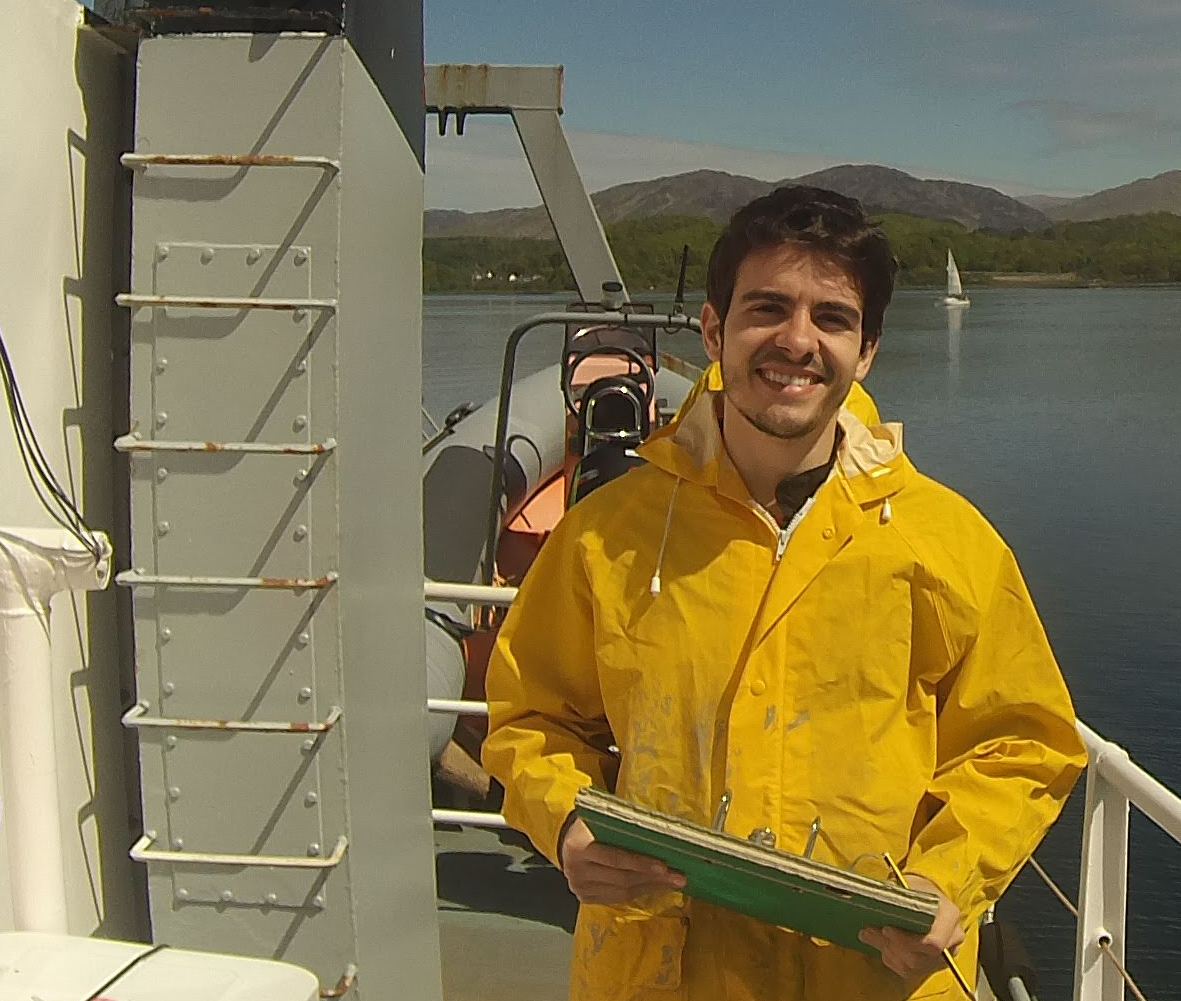
The 2026 Challenger Conference returned to Bangor for the fourth time this September (7–11 September), hosting nearly 200 marine scientists across oral sessions, posters, and Special Interest Group meetings, making it one of the UK’s largest gatherings of marine scientists. Keynotes included Emma McKinley on ocean literacy, Gerard McCarthy on the AMOC, and Kate Hendry on polar biogeochemistry, alongside the Challenger Medal lecture by our University of Liverpool colleague Prof. Ric Williams on “Oceans and climate in a warming world.”
Our presence at the conference
PRECOG had a strong showing, with four contributions spanning posters and an oral talk in the “Biological Carbon Pump (BCP) & Ocean Carbon Storage” session.
Sam Ditkovsky (oral)
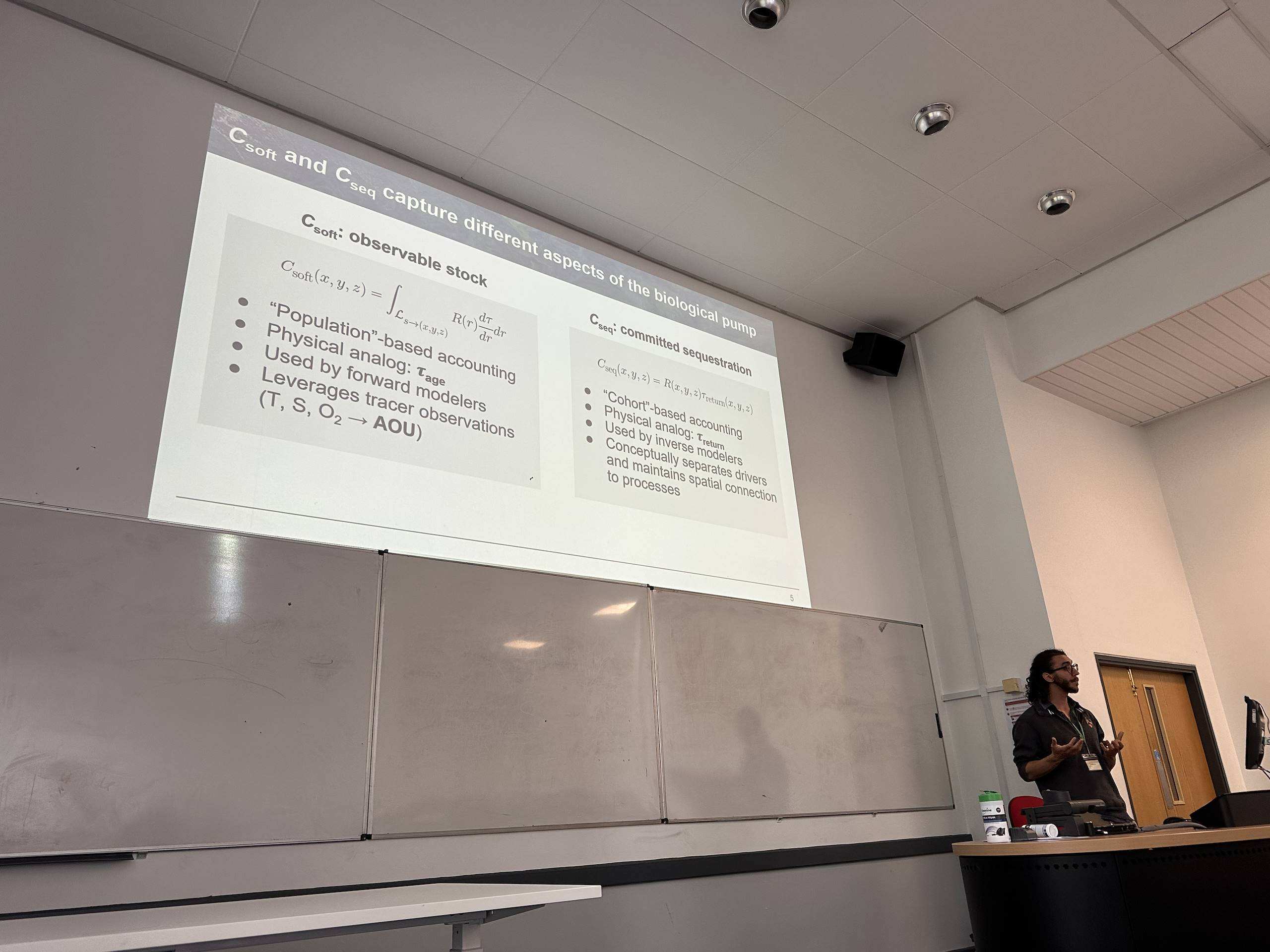
Sam took over the stage on Tuesday during the “Biological Carbon Pump & Ocean Carbon Storage” session and presented a talk titled “Understanding carbon sequestration times in transient climate simulations” where he addressed key differences between Csoft and Cseq depending on how carbon sequestration timescales are estimated (i.e., from a water parcel ventilation perspective or return time from the interior to the surface) and how these evolve under transient climate forcing, connecting BCP efficiency to time‑dependent changes in circulation and biogeochemistry.
Jamie Wilson (poster)
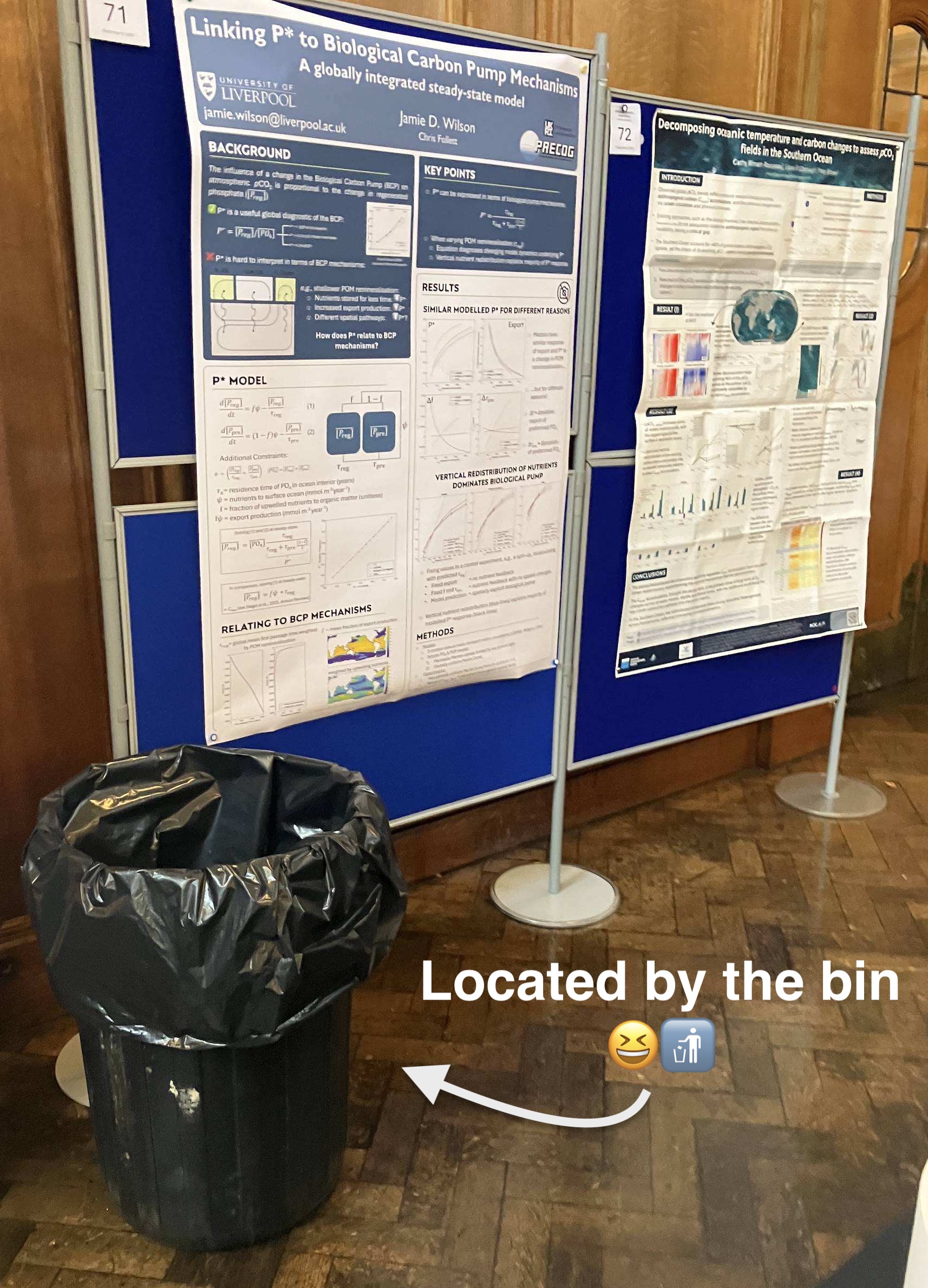
Jamie presented a poster titled “Linking P* to Biological Pump Mechansms: a globally integrated steady‑state model. This work presents a model framework that links Biological Carbon Pump processes to carbon storage which potentially provides a simple approach to assessing Biological Pump sensitivity in models.
Leo Bertini (poster)
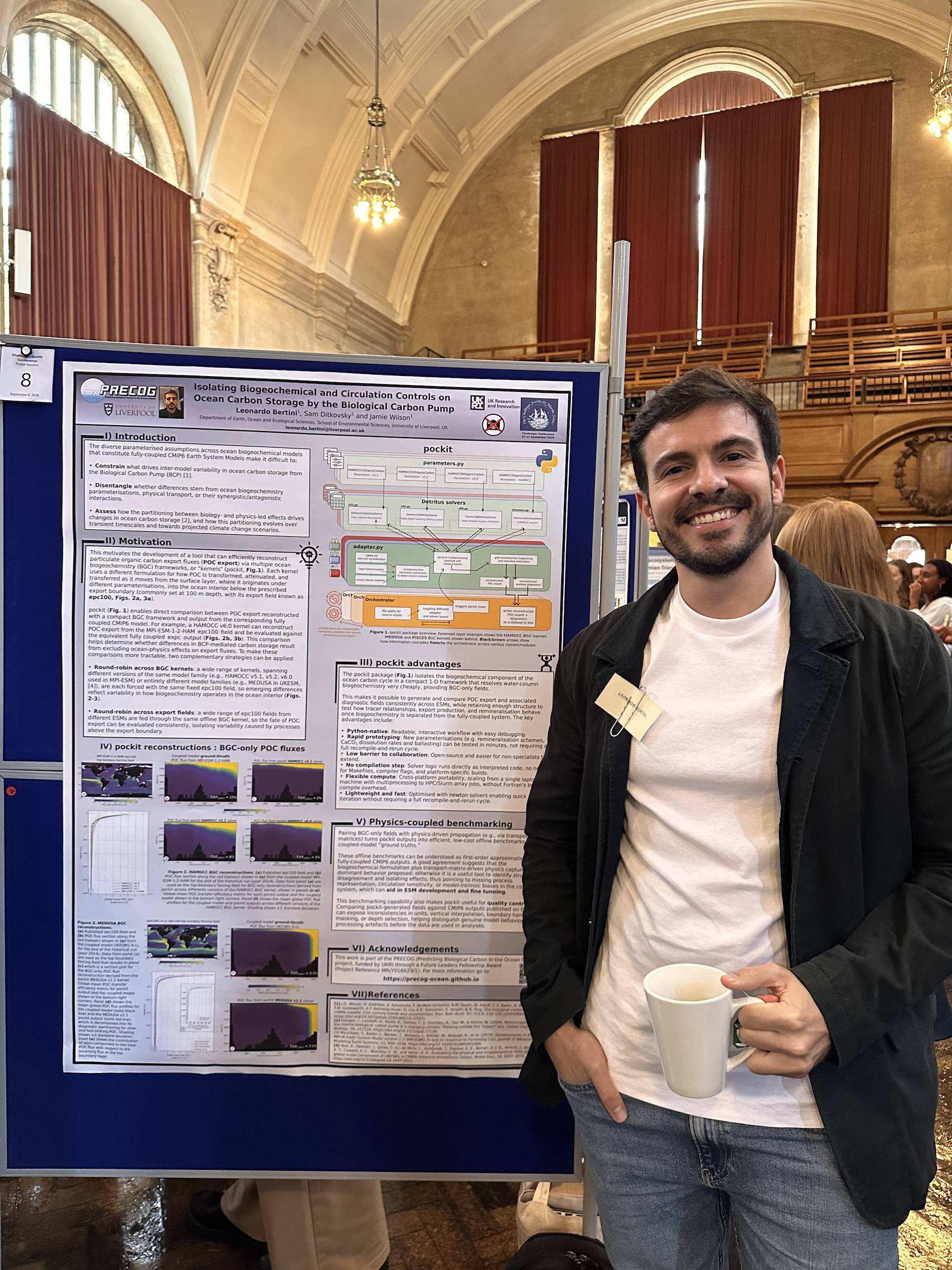
Leo presented a poster titled “Isolating Biogeochemical and Circulation Controls on Ocean Carbon Storage by the Biological Carbon Pump”, where he featured for the first time the Python package he’s been working on. It uses a 1‑D framework to solve POC fluxes across different ocean biogeochemical models, which can then be used to reconstruct biology-driven POC fluxes and further isolate circulation‑driven uncertainty from coupled model groundtruths, providing a basis to interpret inter‑model spread and model‑intrinsic biases in biologically mediated ocean carbon storage.
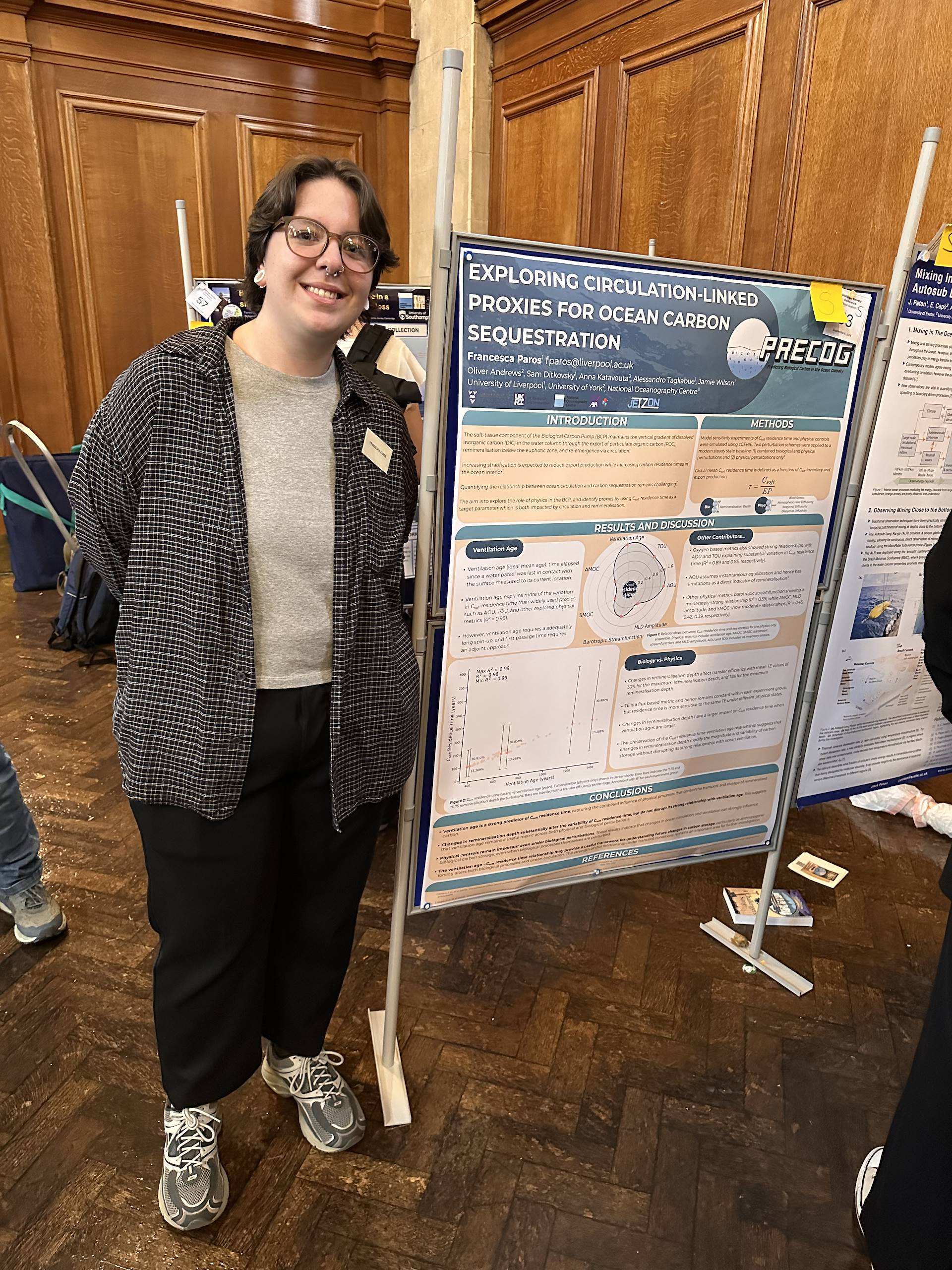
Chesca Pharos (poster)
Chesca presented a poster titled “Exploring circulation‑linked proxies for ocean carbon sequestration” showcasing the latest work on exploring proxies that link ocean circulation diagnostics to carbon sequestration, aiming to identify observable indicators of BCP strength and variability.
Thanks and next steps
Thanks to the Challenger Society and our Bangor University colleagues for hosting a vibrant meeting. We’re grateful to everyone who stopped by our posters and joined the discussions — the feedback will directly shape the next stage of the work we do as part of the PRECOG project.
Challenger 2026 was a fantastic opportunity to share our latest work on the biological carbon pump, connect with the UK marine community, and celebrate progress across the project. It was also a particularly enjoyable meeting on a personal level. We were very excited to be reunited in Bangor, to celebrate Ric’s medal lecture, and to catch up with many of our fellow UK-based marine scientists.
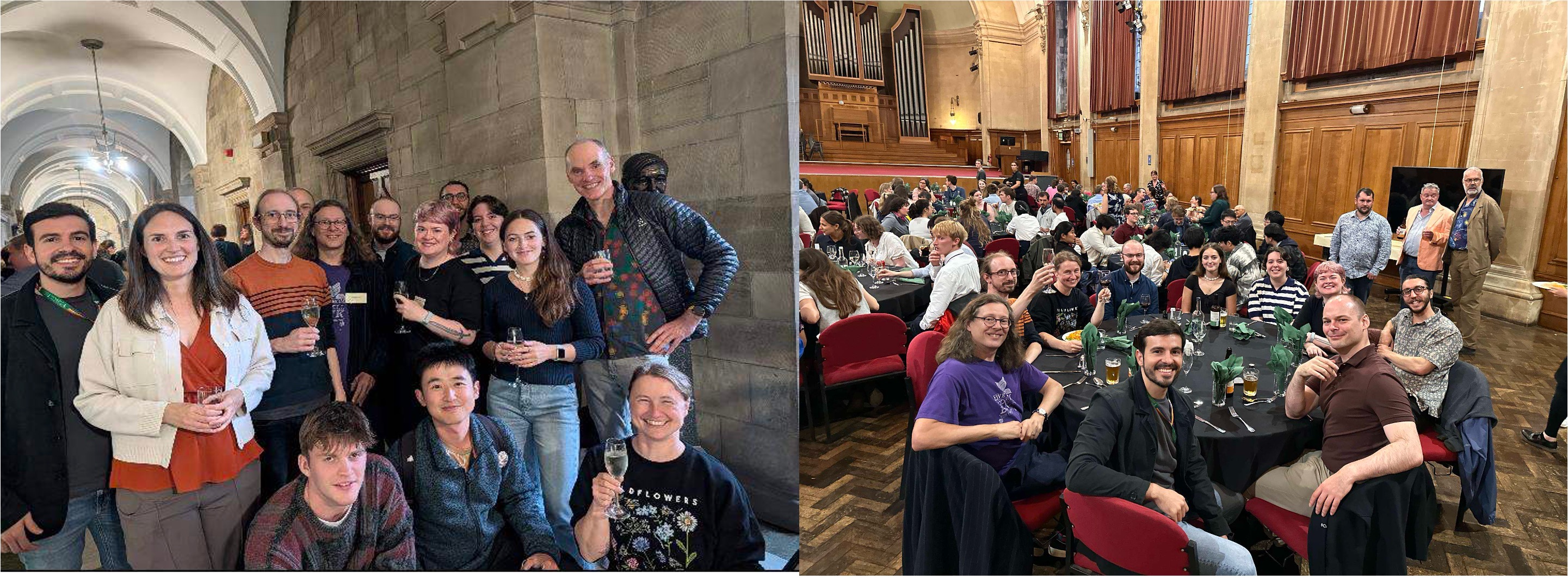
The traditional conference dinner was another highlight, with the University of Liverpool very well represented both around the table (photo shown below) and, later in the evening, on the dancefloor.
If you’d like to check out our latest updates, please by visit our GitHub org page at github.com/precog-ocean.